Body pain, stiffness, or difficulty in movement are often ignored until they become severe. Many people continue their daily routine despite discomfort, assuming the problem will go away on its own. However, delaying treatment can sometimes worsen the condition and affect your daily life, posture, mobility, and overall health.
Physiotherapy is not only for injury recovery—it also helps improve movement, reduce pain, restore strength, and prevent long-term complications. Recognizing the early signs can help you seek timely treatment and recover faster.
Here are 5 important signs you may need physiotherapy immediately.
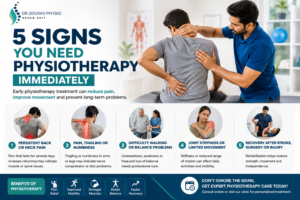
1. Persistent Back or Neck Pain
One of the most common reasons people require physiotherapy is continuous back or neck pain. Long office sitting, poor posture, lack of exercise, heavy lifting, or improper sleeping positions can strain the muscles and spine.
If your pain:
- lasts for several days,
- keeps returning,
- increases during movement,
- or affects daily activities,
then professional physiotherapy assessment is important.
Physiotherapy helps improve posture, spinal mobility, muscle strength, and flexibility while reducing pain safely without depending only on medication.
2. Pain, Tingling, or Numbness in Arms or Legs
Tingling sensations, numbness, or pain radiating from the neck or lower back into the arms or legs may indicate nerve involvement.
Conditions such as:
- Sciatica
- Disc problems
- Cervical radiculopathy
- Nerve compression
can worsen if ignored.
Early physiotherapy treatment can help reduce nerve irritation, improve movement, and prevent further complications through guided exercises and rehabilitation techniques.
3. Difficulty Walking or Balance Problems
If you experience:
- unsteady walking,
- frequent loss of balance,
- weakness in the legs,
- dizziness during movement,
- or fear of falling,
you may need immediate physiotherapy support.
Balance problems are common in:
- elderly individuals,
- stroke patients,
- Parkinson’s disease,
- neurological disorders,
- and post-surgery recovery.
Neuro physiotherapy and balance training help improve coordination, walking ability, stability, and confidence in daily movement.
4. Joint Stiffness or Limited Movement
Difficulty moving your shoulder, knee, neck, or back normally may indicate muscle tightness, joint stiffness, inflammation, or injury.
Common examples include:
- Frozen shoulder
- Knee stiffness
- Post-injury restriction
- Sports injuries
- Muscle tightness
Ignoring stiffness may gradually reduce flexibility and affect daily activities.
Physiotherapy helps restore normal movement through stretching, mobility exercises, strengthening programs, and posture correction techniques.
5. Recovery After Stroke, Surgery, or Injury
After stroke, surgery, fractures, ligament injury, or prolonged illness, the body often loses strength, balance, and mobility.
Without proper rehabilitation, patients may struggle with:
- walking,
- standing,
- muscle weakness,
- coordination,
- and daily activities.
Physiotherapy plays a major role in improving recovery, restoring movement, increasing independence, and preventing complications after injury or surgery.
Benefits of Early Physiotherapy Treatment
Seeking physiotherapy early can help:
- Reduce pain naturally
- Improve posture and flexibility
- Restore mobility and balance
- Prevent worsening of injury
- Improve muscle strength
- Enhance recovery speed
- Reduce risk of long-term complications
Early intervention often leads to faster and safer recovery.
Online Physiotherapy & Home Rehabilitation Support
Today, physiotherapy support is more accessible than ever. Patients can benefit from:
- Online physiotherapy consultation
- Home visit physiotherapy
- AI guided exercise programs
- e-Prescription support
- Personalized rehabilitation plans
These services help patients continue recovery comfortably from home while maintaining proper monitoring and guidance.
When Should You Consult a Physiotherapist?
You should consult a physiotherapist if:
- pain affects daily activities,
- movement becomes restricted,
- symptoms continue for several days,
- balance becomes difficult,
- or recovery feels slow after injury or illness.
Ignoring these signs can sometimes increase the risk of chronic pain and mobility issues.
Final Thoughts
Physiotherapy is not just about pain relief—it helps restore movement, improve quality of life, and support long-term health and recovery.
If you notice persistent pain, numbness, weakness, stiffness, or movement difficulties, seeking physiotherapy guidance early can make a significant difference in your recovery journey.