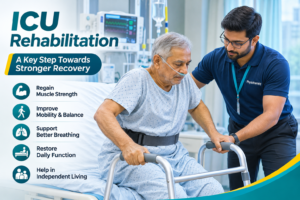
Recovering from a critical illness is often a long and challenging journey. Patients who have spent several days or weeks in an Intensive Care Unit (ICU) may experience significant physical weakness, reduced mobility, breathing difficulties, balance problems, and difficulty performing everyday activities. Even after the primary medical condition has been treated, the body may need considerable time and professional support to regain strength and function.
This is where ICU rehabilitation and physiotherapy play an important role.
ICU rehabilitation focuses on helping patients gradually recover their physical abilities after prolonged hospitalisation, critical illness, surgery, or mechanical ventilation. With an individually planned rehabilitation programme, patients can work towards improving muscle strength, mobility, balance, endurance, and functional independence.
At Dr. Sourav Physio & Rehab Unit, rehabilitation programmes are designed according to each patient’s medical condition, functional ability, and recovery requirements. Home-based rehabilitation may also be considered for medically stable patients who need continued physiotherapy after hospital discharge.
What Is ICU Rehabilitation?
ICU rehabilitation is a specialised rehabilitation approach designed for patients recovering from critical illness or prolonged stays in intensive care.
During an ICU stay, patients may remain inactive for extended periods due to their medical condition, sedation, ventilation, or other treatment requirements. This inactivity, along with the effects of critical illness, can contribute to muscle weakness, joint stiffness, reduced physical endurance, and difficulties with movement.
ICU rehabilitation aims to address these challenges through carefully planned physiotherapy and functional exercises.
Depending on the patient’s condition, rehabilitation may include:
- Bed mobility and repositioning
- Passive and active-assisted exercises
- Progressive muscle strengthening
- Sitting balance and trunk control training
- Standing and weight-bearing exercises
- Transfer and mobility training
- Gait and walking training
- Functional activity and daily living practice
- Respiratory physiotherapy when clinically indicated
- Caregiver education and home exercise guidance
The rehabilitation programme is adjusted according to the patient’s medical stability, tolerance, and progress.
Why Do Patients Need Rehabilitation After an ICU Stay?
Leaving the ICU does not always mean that a patient has regained their previous physical abilities. Many patients continue to experience weakness and functional limitations after discharge.
Some common challenges include:
1. Severe Muscle Weakness
Prolonged bed rest and critical illness can cause significant muscle weakness. Patients may struggle to lift their arms, move their legs, sit independently, or stand without assistance.
Physiotherapy helps patients gradually rebuild muscle strength through appropriate exercises and progressive strengthening activities.
2. Difficulty Walking and Moving
After an extended hospital stay, patients may find it difficult to stand, transfer from bed to chair, or walk independently.
Rehabilitation focuses on improving movement control, weight-bearing ability, balance, and walking skills.
3. Reduced Balance and Coordination
Critical illness and prolonged inactivity can affect balance and coordination. Patients may feel unstable while sitting, standing, or attempting to walk.
Balance training and controlled functional activities can help patients gradually improve their stability.
4. Reduced Breathing Capacity and Endurance
Some patients experience breathing difficulties, reduced exercise tolerance, or general fatigue after critical illness and prolonged ventilation.
When indicated, respiratory physiotherapy and carefully supervised physical activity may be incorporated into the rehabilitation programme.
5. Difficulty Performing Daily Activities
Simple activities such as sitting up, changing clothes, using the bathroom, eating independently, and moving around the house may become difficult.
Functional rehabilitation focuses on helping patients gradually regain the abilities required for everyday life.
What Is Post-ICU Syndrome (PICS)?
Post-Intensive Care Syndrome (PICS) refers to new or worsening health problems that may develop during or after an ICU stay and continue beyond hospital discharge.
It can affect different aspects of a patient’s health, including:
- Physical health: Muscle weakness, fatigue, reduced mobility, and decreased endurance.
- Cognitive function: Problems with memory, attention, and concentration.
- Mental health: Anxiety, depression, sleep disturbances, and symptoms related to traumatic stress.
Not every ICU patient develops PICS, and its effects can vary considerably.
A multidisciplinary recovery approach involving doctors, physiotherapists, occupational therapists, psychologists, and other healthcare professionals may be required depending on the patient’s needs.
Who Needs ICU and Post-ICU Rehabilitation?
ICU rehabilitation may be beneficial for suitable patients recovering from various serious medical conditions.
Patients Recovering from Prolonged ICU Admission
Patients who have spent an extended period in intensive care may experience significant physical deconditioning and require structured rehabilitation to regain mobility.
Patients Recovering from Mechanical Ventilation
Patients who have received ventilatory support may experience generalised weakness and reduced exercise tolerance. Rehabilitation may help address these physical limitations after appropriate medical assessment.
Patients Recovering from Stroke
Stroke can affect muscle strength, coordination, balance, speech, and mobility. Neurological rehabilitation focuses on improving affected functions and supporting greater independence.
Patients Recovering from Brain Haemorrhage or Brain Surgery
Patients recovering from brain haemorrhage, brain tumour surgery, or other neurosurgical procedures may require specialised neurological physiotherapy based on their condition.
Patients with Traumatic Brain Injury
Traumatic brain injury may cause movement difficulties, reduced coordination, balance problems, and functional limitations. A structured rehabilitation programme can address these challenges.
Patients with Spinal Cord Injury
Depending on the level and severity of injury, patients may require rehabilitation to improve mobility, positioning, transfers, strength, and functional abilities.
Patients with Guillain-Barré Syndrome (GBS)
GBS can cause significant muscle weakness and movement difficulties. Rehabilitation may support gradual recovery of strength, mobility, and functional activities under appropriate medical supervision.
Elderly Patients After Critical Illness
Older adults may experience substantial weakness and loss of independence following prolonged hospitalisation. Individualised rehabilitation can help address mobility limitations and support everyday activities.
Important Components of an ICU Rehabilitation Programme
Every patient’s rehabilitation needs are different. A physiotherapist assesses the patient’s condition and develops an appropriate treatment plan.
1. Bed Mobility Training
Patients who cannot move independently may initially require assistance with changing positions, rolling, and moving from lying to sitting.
Bed mobility training helps develop the movement skills required for greater independence.
2. Passive and Active-Assisted Exercises
Patients with severe weakness may initially be unable to perform movements independently.
Passive and active-assisted exercises help maintain joint movement and gradually introduce physical activity according to the patient’s ability.
3. Progressive Muscle Strengthening
As the patient’s condition improves, appropriate strengthening exercises may be introduced.
These exercises can target the arms, legs, trunk, and other muscle groups to support improved movement and functional performance.
4. Sitting Balance and Trunk Control
The ability to sit safely is an important step towards independent mobility.
Physiotherapy may include supported sitting, trunk control exercises, weight shifting, and balance activities.
5. Standing and Weight-Bearing Training
When medically appropriate, patients may gradually progress to supported standing and weight-bearing activities.
These activities help prepare patients for transfers, walking, and other functional movements.
6. Gait and Walking Training
Patients who have difficulty walking may require progressive gait training.
Depending on their needs, therapy may involve parallel bars, walking aids, assisted walking, and balance exercises.
7. Functional Mobility Training
Rehabilitation also focuses on practical movements required in everyday life, including:
- Moving from bed to chair
- Sitting and standing
- Changing positions safely
- Walking short distances
- Moving around the home
- Performing appropriate daily activities
8. Respiratory Physiotherapy
Some patients may require respiratory physiotherapy depending on their respiratory condition and clinical assessment.
This may include appropriate breathing exercises, airway clearance techniques, positioning, and other interventions when indicated.
Home-Based ICU Rehabilitation: Continuing Recovery After Hospital Discharge
For medically stable patients, continuing rehabilitation at home may be a practical option after hospital discharge.
Home-based ICU rehabilitation brings professional physiotherapy support into the patient’s familiar surroundings. It can reduce the difficulties associated with repeated hospital visits, particularly for patients who have limited mobility or require assistance with transportation.
At Dr. Sourav Physio & Rehab Unit, home-based rehabilitation is planned according to the patient’s condition, available space, and treatment requirements.
How Does Home-Based Rehabilitation Work?
The process generally involves the following steps:
Step 1: Initial Assessment
The patient’s medical history, current condition, mobility, muscle strength, balance, and functional limitations are assessed.
Step 2: Individualised Rehabilitation Planning
A rehabilitation programme is prepared according to the patient’s needs, medical clearance, and recovery goals.
Step 3: Home Rehabilitation Setup
A suitable space is identified for therapy. Depending on the patient’s requirements, appropriate rehabilitation equipment may be arranged.
Step 4: Structured Physiotherapy Sessions
Therapy may include strengthening exercises, mobility training, balance activities, gait training, positioning, and functional rehabilitation.
Step 5: Progress Monitoring
The patient’s response to therapy is monitored, and the rehabilitation programme is modified when necessary.
Equipment Used in Home-Based ICU Rehabilitation
Depending on the patient’s condition and rehabilitation goals, different equipment may be used during home-based physiotherapy.
Examples include:
- Parallel bars for supported standing and walking practice
- Therapy mats and exercise beds
- Balance training equipment
- Resistance bands
- Weight cuffs
- Mobility and transfer aids
- Positioning and pressure-relief accessories
- Appropriate respiratory therapy equipment when indicated
Not every patient requires all these items. Equipment selection depends on the clinical assessment and available space.
Benefits of Home-Based ICU Rehabilitation
For suitable patients, home-based rehabilitation offers several practical advantages.
Comfortable Recovery Environment
Patients can continue rehabilitation in familiar surroundings, which may make participation more convenient.
Reduced Travel Difficulties
Patients with severe weakness or mobility restrictions may find repeated hospital travel challenging. Home-based physiotherapy can reduce the need for frequent transportation.
Individualised Attention
Therapy can be planned around the patient’s functional limitations, daily routine, and recovery requirements.
Family Participation
Family members and caregivers can learn appropriate positioning, safe assistance techniques, and prescribed home exercises.
Functional Training in a Real-Life Environment
Patients can practise appropriate movements and activities in their actual home environment, helping them work towards everyday functional goals.
Potential Cost Convenience
For some families, home-based rehabilitation may reduce repeated transportation and certain facility-related expenses. The overall cost depends on the treatment arrangement, equipment requirements, travel, and duration of care.
How Many Hours of Rehabilitation Does a Patient Need?
There is no single rehabilitation schedule suitable for every ICU patient.
The duration and intensity of physiotherapy depend on several factors, including:
- The patient’s medical stability
- Severity of muscle weakness
- Respiratory and cardiovascular tolerance
- Neurological condition
- Ability to participate in therapy
- Fatigue and recovery requirements
- Individual rehabilitation goals
Some suitable patients may benefit from structured rehabilitation support distributed across multiple sessions throughout the day, with adequate rest periods.
A programme involving extended daily support, potentially up to 6–7 hours for selected patients, must be individually assessed and should not be interpreted as continuous intensive exercise.
Patient safety, tolerance, and appropriate medical supervision must always remain the priority.
Why Choose Dr. Sourav Physio & Rehab Unit for ICU Rehabilitation?
Dr. Sourav Physio & Rehab Unit provides physiotherapy and rehabilitation support for patients recovering from critical illness, neurological conditions, prolonged hospitalisation, and major surgery.
Led by Dr. Sourav Kumar Mondal (PT), Consultant Physiotherapist, the unit focuses on personalised rehabilitation according to each patient’s functional condition and recovery requirements.
Our rehabilitation services include:
- ICU and post-ICU rehabilitation
- Neurological physiotherapy
- Stroke and post-stroke rehabilitation
- Traumatic brain injury rehabilitation
- Brain haemorrhage rehabilitation
- Post-neurosurgery rehabilitation
- Spinal cord injury rehabilitation
- Guillain-Barré Syndrome rehabilitation
- Post-ventilation weakness management
- Severe muscle weakness rehabilitation
- Bedridden patient rehabilitation
- Mobility, balance, and gait training
- Home-based physiotherapy and caregiver guidance
The objective is to help patients work towards better movement, improved functional abilities, and greater independence through appropriate rehabilitation.
When Should ICU Rehabilitation Begin?
Rehabilitation should begin when the treating medical team considers the patient medically stable and able to participate in appropriate physical activity.
In some cases, carefully selected rehabilitation activities may begin even during an ICU stay under the supervision of the medical and rehabilitation teams.
After hospital discharge, the rehabilitation plan should continue according to the patient’s medical condition and functional needs.
Patients should never begin strenuous exercises or intensive physical activity without appropriate medical clearance.
Frequently Asked Questions About ICU Rehabilitation
1. What is ICU rehabilitation?
ICU rehabilitation is a specialised physiotherapy and rehabilitation approach that helps patients recover physical function after critical illness, prolonged hospitalisation, or intensive care treatment.
2. Why do patients experience weakness after an ICU stay?
Critical illness, prolonged bed rest, sedation, mechanical ventilation, and reduced physical activity can contribute to muscle loss, weakness, and reduced endurance.
3. Can ICU rehabilitation be provided at home?
Yes. Home-based rehabilitation may be suitable for medically stable patients who need continued physiotherapy after hospital discharge. An individual assessment and medical clearance are essential.
4. How long does post-ICU rehabilitation take?
Recovery time varies from patient to patient. It depends on the severity of the illness, existing health conditions, muscle weakness, functional limitations, and response to rehabilitation.
5. Can bedridden patients receive physiotherapy at home?
Yes. Suitable bedridden patients may receive individualised physiotherapy, including positioning, passive and active-assisted exercises, bed mobility training, and progressive functional rehabilitation.
6. Is physiotherapy helpful after mechanical ventilation?
Physiotherapy may help address muscle weakness, reduced mobility, and deconditioning after mechanical ventilation. Treatment must be planned according to the patient’s respiratory and medical stability.
7. Can elderly patients benefit from ICU rehabilitation?
Yes. Older adults recovering from critical illness may benefit from individualised rehabilitation to address weakness, balance difficulties, reduced mobility, and loss of functional independence.
8. Does every ICU patient need the same rehabilitation programme?
No. Every programme should be individualised according to the patient’s diagnosis, medical stability, physical abilities, and recovery goals.
Take the Next Step Towards Recovery
Recovery after critical illness requires patience, appropriate medical care, and a structured rehabilitation approach. Even after discharge from the hospital, patients may need professional support to rebuild strength, improve mobility, and regain everyday functional abilities.
With individualised ICU rehabilitation and home-based physiotherapy, suitable patients can continue their recovery journey in a familiar environment with professional guidance and family support.
Author
Dr. Sourav Physio & Rehab Unit
Led by Dr. Sourav Kumar Mondal (PT) – Consultant Physiotherapist
Website: https://the-physiotherapist.com/
For rehabilitation enquiries, contact the unit to discuss the patient’s condition and arrange an initial assessment.
Medical Disclaimer: This article is for general educational purposes and does not replace medical advice, diagnosis, or treatment. Home-based rehabilitation is appropriate only after individual assessment and medical clearance. Patients requiring ICU monitoring, ventilatory support, or emergency medical intervention must remain under appropriate medical care.